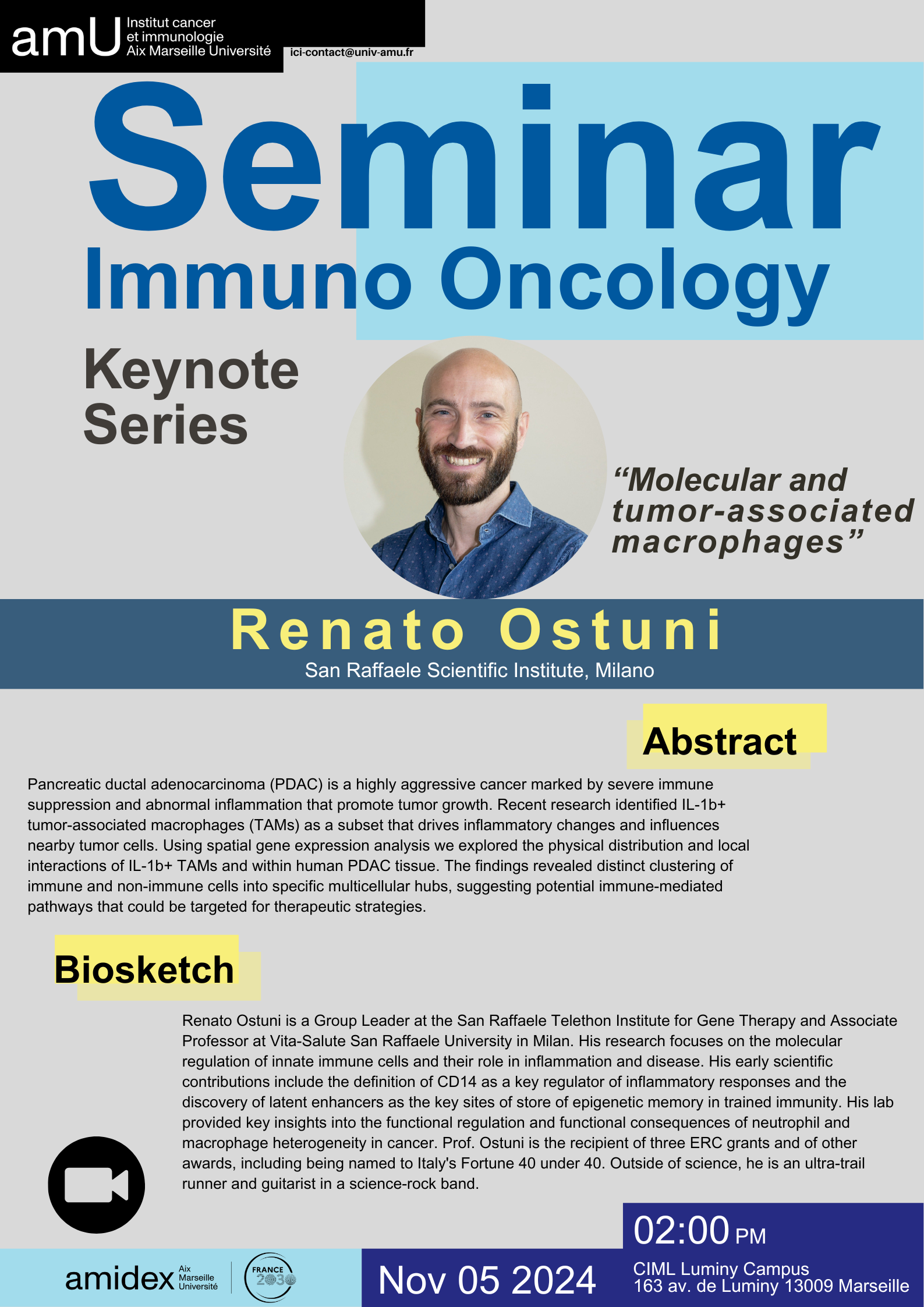
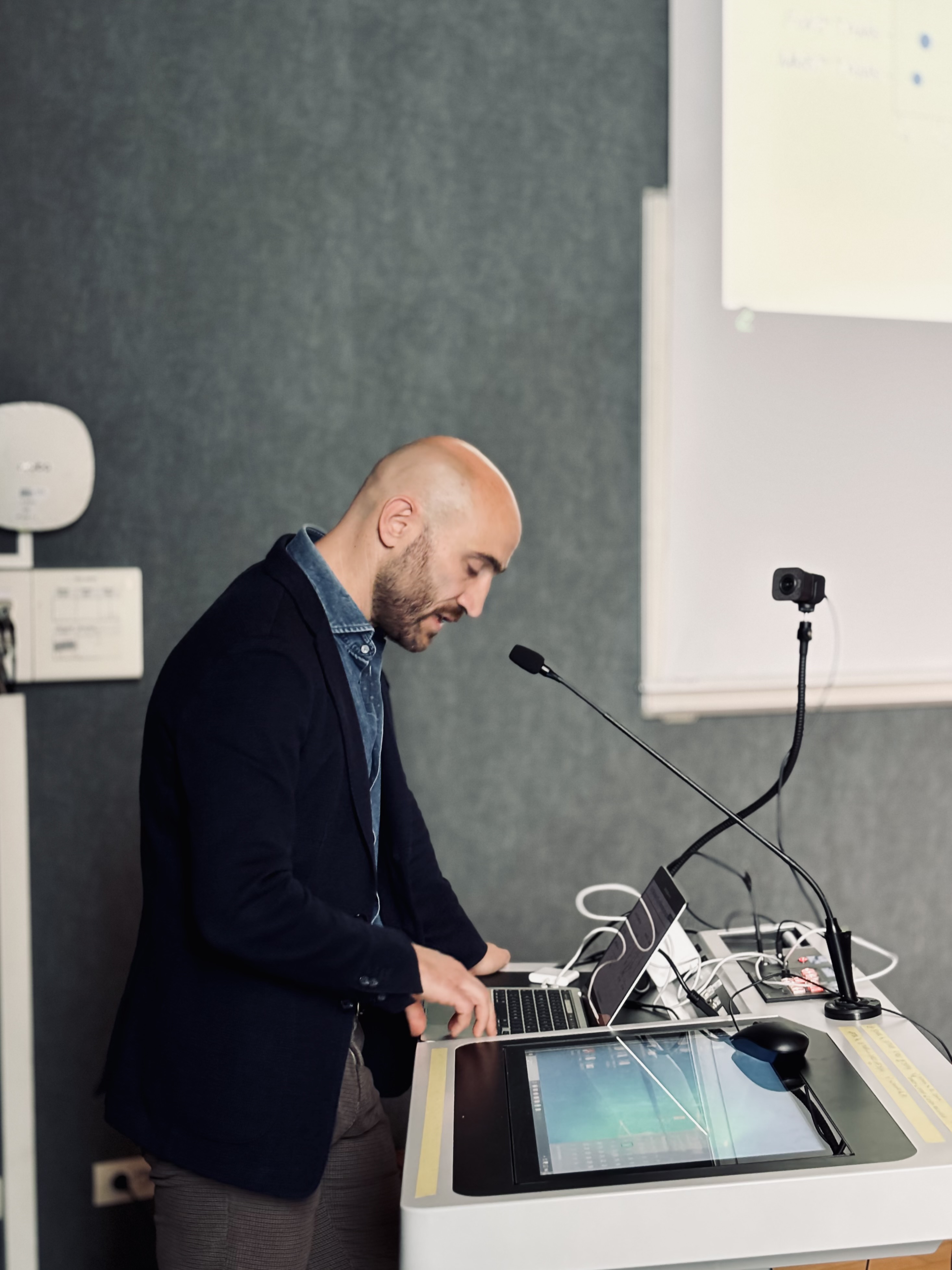
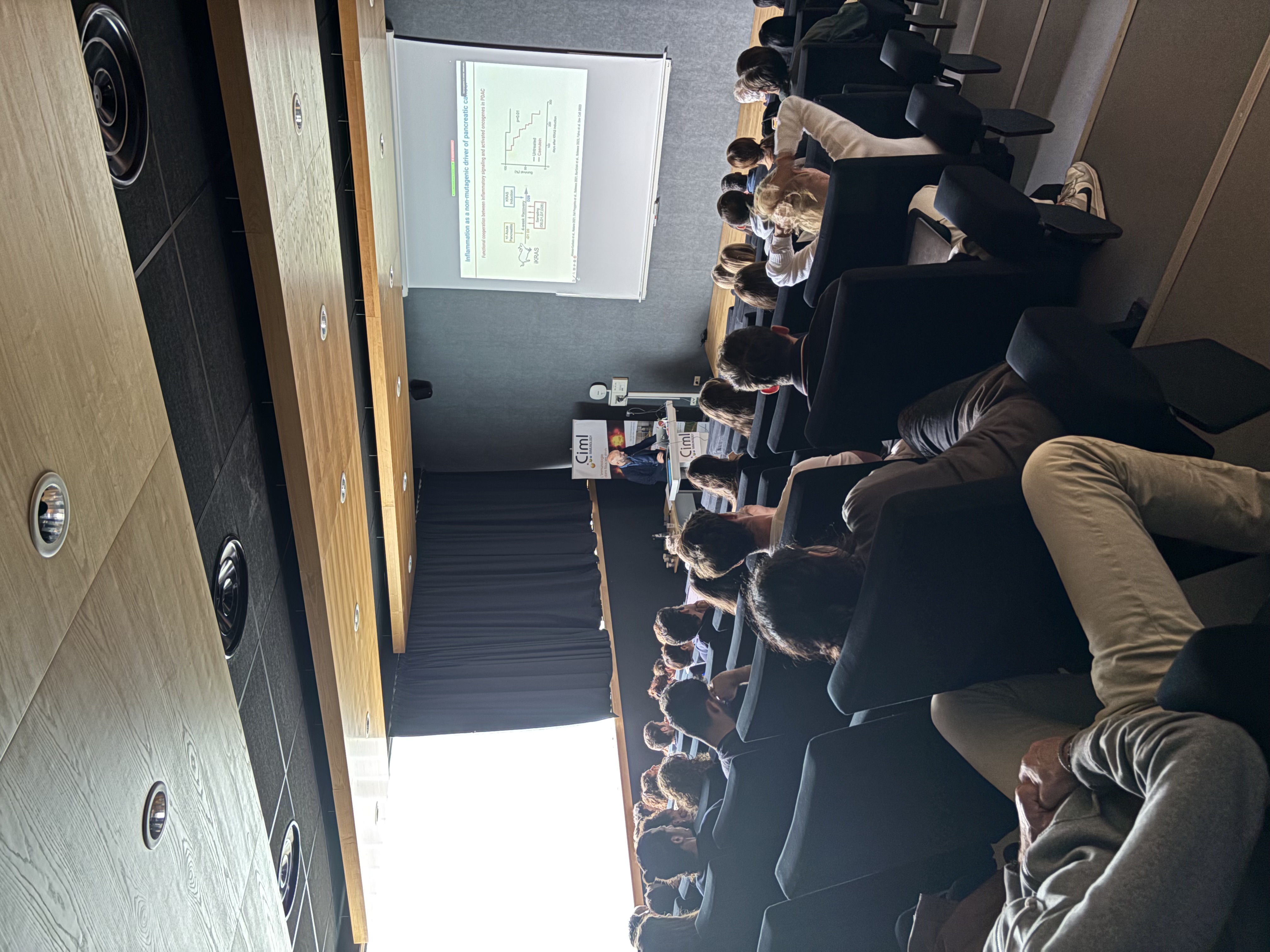
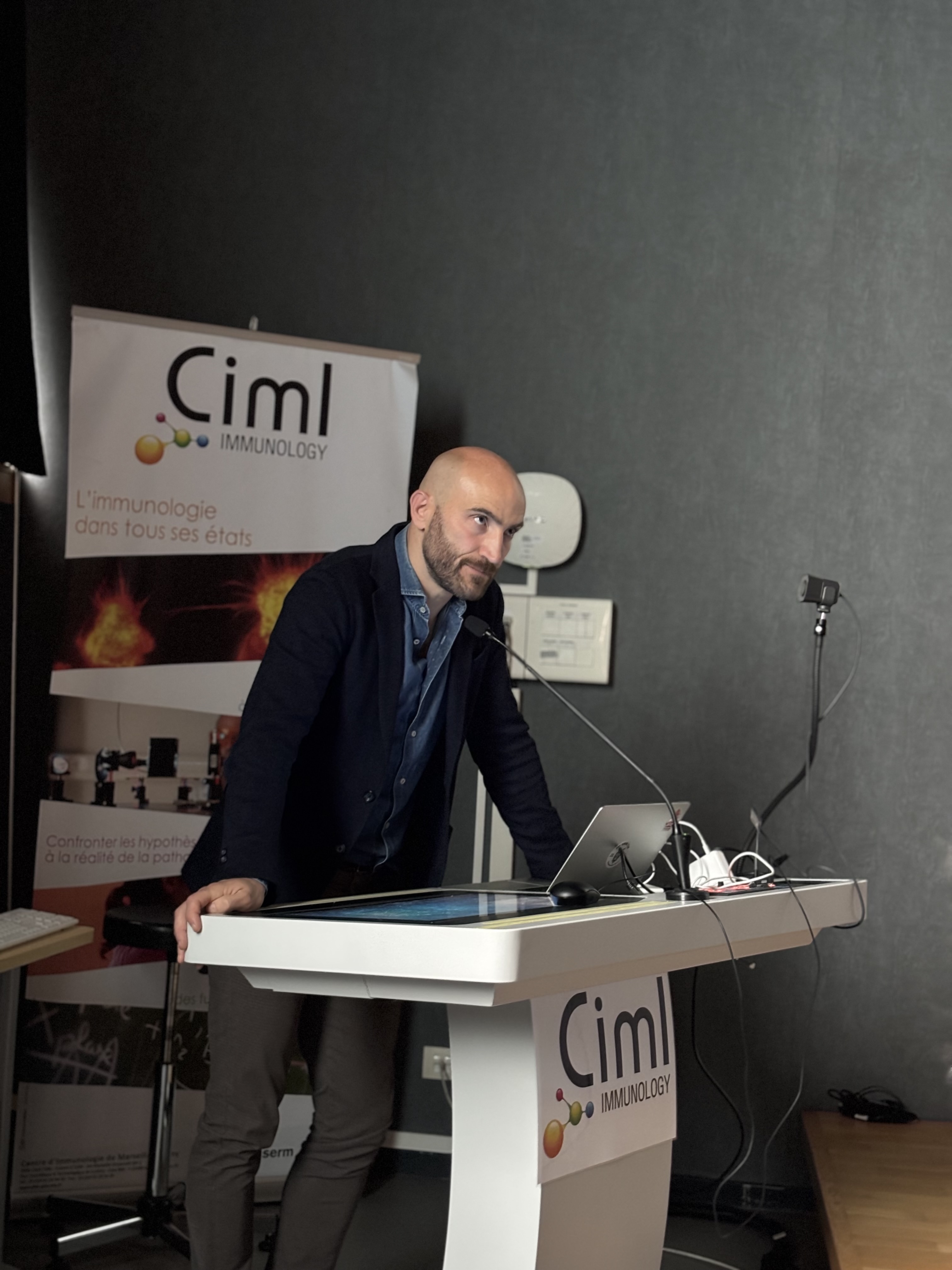
On November 5, Renato Ostuni from the San Raffaele Scientific Institute, Milan, Italy, visited CIML on the Luminy campus.
His seminar focused on "Molecular and spatial control of tumor-associated macrophages".
Abstract:
Pancreatic ductal adenocarcinoma (PDAC) is a highly aggressive cancer marked by severe immune suppression and abnormal inflammation that promote tumor growth. Recent research identified IL-1b+ tumor-associated macrophages (TAMs) as a subset that drives inflammatory changes and influences nearby tumor cells. Using spatial gene expression analysis we explored the physical distribution and local interactions of IL-1b+ TAMs and within human PDAC tissue. The findings revealed distinct clustering of immune and non-immune cells into specific multicellular hubs, suggesting potential immune-mediated pathways that could be targeted for therapeutic strategies.
Bio:
Renato Ostuni is a Group Leader at the San Raffaele Telethon Institute for Gene Therapy and Associate Professor at Vita-Salute San Raffaele University in Milan. His research focuses on the molecular regulation of innate immune cells and their role in inflammation and disease. His early scientific contributions include the definition of CD14 as a key regulator of inflammatory responses and the discovery of latent enhancers as the key sites of store of epigenetic memory in trained immunity. His lab provided key insights into the functional regulation and functional consequences of neutrophil and macrophage heterogeneity in cancer. Prof. Ostuni is the recipient of three ERC grants and of other awards, including being named to Italy's Fortune 40 under 40. Outside of science, he is an ultra-trail runner and guitarist in a science-rock band.